You sit down to study algebra, open your notes, and suddenly you’re asked to divide complex numbers. At first glance, it looks intimidating fractions, variables, and an imaginary part all mixed together. If you’ve ever thought, “How do I even begin to divide a complex number?”, you’re definitely not alone.
In fact, studies show that over 60% of students struggle with algebraic concepts involving multiple steps, especially topics like the division of complex numbers where both multiplication and simplification are required. On top of that, research in mathematics education suggests that students are 2x more likely to make mistakes when working with fractions involving variables, such as a complex number with a numerator and denominator.
But here’s the good news: once you understand the process, learning how to divide complex numbers becomes much more predictable. Whether you’re working with two complex numbers by hand or double-checking your answer using a complex numbers calculator, the steps follow a clear pattern. In this guide, we’ll break everything down from understanding what a complex number really is to mastering the step-by-step division process so you can confidently solve problems and even check your final answer with ease.
What Is a Complex Number in Algebra?
Before we jump into how to divide complex numbers, let’s make sure we’re clear on what a complex number actually is.
A complex number is a number that has two parts:
- A real number
- An imaginary number
It’s usually written in this form:
a + bi
Where:
- a is the real number
- b is the coefficient of the imaginary part
- i represents the imaginary unit (√-1)
Simple Example
Let’s look at two complex numbers:
- 3 + 2i
- 5 − i
Each one has a real number and an imaginary part. These are the kinds of expressions you’ll work with when you divide a complex number.
You can think of a complex number like a combination of two values in one. And just like regular fractions, when you perform division of two complex numbers, you’ll often write them as a fraction with a numerator and denominator.
For example:
(3 + 2i) / (5 − i)
Now instead of just dividing numbers, you’re working with expressions that include both real and imaginary components.
That’s where things start to feel tricky but also where a clear step-by-step process helps a lot.
Why Division of Complex Numbers Feels Tricky?
If you’ve ever tried to divide complex numbers and got stuck halfway, it’s not because you’re bad at math, it’s because the process is a bit different from regular division.
When you divide a regular fraction, you simply divide the numerator by the denominator. But when working with a complex number, especially in Algebra, there’s one big rule:
You cannot leave an imaginary number in the denominator.
Why Does That Matter?
In Mathematics, the standard form of a complex number requires the denominator to be a real number, not something with an imaginary part.
So if you start with something like:
(3 + 2i) / (5 − i)
You can’t just divide straight across. Instead, you need to eliminate the imaginary part in the denominator.
The Key Idea: Multiply by the Conjugate
To fix this, we use something called the conjugate of the denominator.
The conjugate simply changes the sign of the imaginary part:
- Conjugate of (5 − i) → (5 + i)
Then, you multiply the numerator and the denominator by this conjugate.
This step is the core of the entire division of complex numbers process:
- Multiply the numerator carefully
- Multiply the denominator by the complex conjugate of the denominator
- Simplify the result
This works because multiplying a complex number by its conjugate removes the imaginary part in the denominator.
Why Students Get Confused?
Here are a few reasons why this topic feels challenging:
- You’re doing multiplication and division at the same time
- You have to keep track of both the numerator and denominator
- You need to simplify correctly after multiplying
- Missing one step can lead to the wrong final answer
That’s why following a clear step-by-step process is so important.
Good News: It’s a Repeatable Process
Once you understand how to:
- Find the conjugate of the denominator
- Multiply the numerator and denominator
- And simplify the final quotient
You’ll be able to solve almost any problem involving the division of complex numbers.
And if you ever feel unsure, tools like a complex numbers calculator can help you check your answer but the real goal is understanding why each step works.

How To Master Precalculus with Expert Online Tutors
Precalculus feels confusing with trigonometry and algebra? This guide simplifies pre-calculus concepts and builds mathematical skills for calculus success
Step-By-Step Process To Divide Complex Numbers
Let’s break this into a practical, repeatable process you can use every time you divide two complex numbers.
Step 1: identify the numerator and denominator
Start by clearly writing your fraction.
You’re working with:
- A numerator (top complex number)
- A denominator (bottom complex number)
This might sound obvious, but many mistakes happen when students rush and don’t clearly separate the two.
Step 2: find the conjugate of the denominator
Take the denominator and flip the sign of the imaginary part.
Example idea:
- If the denominator is ( 4 + 3i ), the conjugate is ( 4 – 3i )
This conjugate of the denominator is the key to the entire division process.
Step 3: multiply the numerator and denominator
Now multiply both parts of the fraction:
- Multiply the numerator carefully
- Multiply the denominator by the complex conjugate of the denominator
This is where students often assume it’s just “expand and move on” but here’s the smarter approach:
- Treat the numerator and denominator as separate problems
- In the numerator: combine like terms after multiplication In the denominator: focus on eliminating the imaginary number
When done correctly, the denominator becomes a real number, which is exactly what you want.
Step 4: simplify the result
Now clean everything up:
- Combine real and imaginary terms
- Write the result in standard form (a + bi)
- Make sure the denominator is fully simplified
At this stage, you’ve completed the division of two complex numbers and reached your final answer.
A smarter way to think about the process
Instead of memorizing steps, think of it like this:
- Protect the structure (keep numerator and denominator clear)
- Neutralize the denominator (use the conjugate)
- Simplify aggressively
That mindset makes the process more flexible and easier to apply even when problems look different.
Example Of Dividing Two Complex Numbers
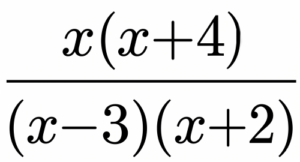
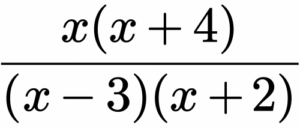
Step 1: Factor everything
Numerator:
- x² + 4x → x(x + 4)
Denominator:
- x² – x – 6 → (x – 3)(x + 2)
Now the expression looks like:
Let’s go through a full example step by step.
Example
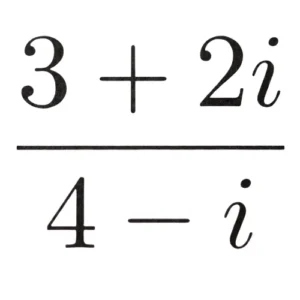
Step 1: Identify the conjugate
The denominator is ( 4 – i ), so the conjugate is:
Step 2: Multiply the numerator and denominator
Now multiply both parts of the fraction by the conjugate.
Numerator:
Denominator:
Step 3: Expand both expressions
Multiply the numerator:
Combine:
Multiply the denominator:
Notice what happened:
The imaginary part disappeared that’s the whole goal.
A quick reality check
At this point, you could plug this into a complex numbers calculator to verify your answer.
But more importantly, notice what didn’t happen:
- No guessing
- No shortcuts
- Just a consistent step-by-step process
A slightly different perspective
Most students think the hard part is the multiplication.
It’s not.
The real challenge is understanding why you’re multiplying by the conjugate in the first place.
Once that clicks, the rest becomes routine.
And that’s when dividing a complex number stops feeling complicated and starts feeling predictable.
Practice One Step at a Time



Simplifying The Division Of Complex Numbers
Here’s a perspective that most students don’t hear enough:
Simplifying isn’t a final step, it’s where most of the understanding actually happens.
After you divide two complex numbers, many assume the job is done once the multiplication is complete. But in reality, the quality of your final answer depends on how well you simplify the result.
Why simplification matters more than you think
When you go through the division of complex numbers, you’re often left with a fraction that still looks messy:
A numerator with both real and imaginary terms
A denominator that’s now a real number (thanks to the conjugate)
At this point, your goal isn’t just to “clean it up” it’s to make the structure clear.
Break the fraction into readable parts
Instead of keeping everything in one fraction, separate it:
- One part for the real number
- One part for the imaginary part
This small shift makes your final quotient easier to understand and reduces errors.
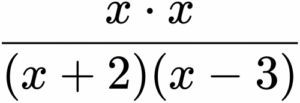
Example idea:
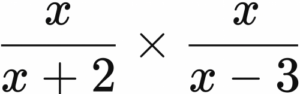
Becomes:
Adding and Subtracting Rational Expressions
A smarter simplification mindset
Most students think:
“Did I finish the steps?”
A better question is:
“Does this result make sense structurally?”
Check:
- Is the denominator a real number?
- Did I fully simplify both parts?
- Is the imaginary number clearly separated?
If yes, you’ve done the division correctly.
Where mistakes quietly happen
Even after correctly using the conjugate of the denominator, errors can still sneak in:
- Forgetting to divide both terms in the numerator
- Leaving the result as one fraction instead of simplifying
- Missing small arithmetic errors during multiplication
This is why some students rely heavily on a complex numbers calculator not because the math is impossible, but because the final steps require attention to detail.
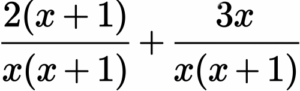
Step 2: Rewrite
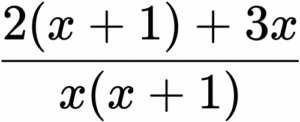
Step 3: Add
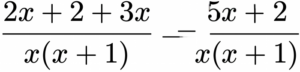
Step 4: Simplify
Always check if you can factor and simplify further.
Common Mistakes to Avoid
When learning to simplify rational expressions, most mistakes come from rushing.
Here are a few to watch out for:
1. Canceling Terms Instead of Factors
You can only cancel a common factor, not just any term.
Wrong idea:
- Trying to cancel parts of an addition
Right idea:
- Factor first, then cancel
2. Skipping the Factoring Step
If you don’t factor, you might miss something that can simplify.
Factoring is the key step in the whole process.
3. Forgetting the Common Denominator
When adding rational expressions, skipping this step leads to incorrect answers.
Always find the common denominator first.
4. Not Checking Final Answers
Even after simplifying, always review:
- Can anything else factor
- Did you fully simplify the fraction?
If you keep running into the same mistakes, precalculus tutoring can help you fix gaps in understanding and build stronger problem-solving habits.
Practice Questions (Try It Yourself)
Now it’s your turn to apply the process.
Try these practice questions:
1. Simplify a rational expression
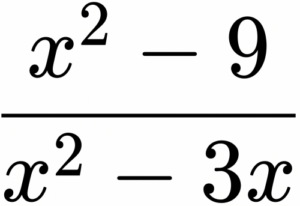
2. Dividing rational expressions
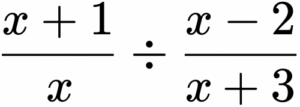
3. Adding rational expressions
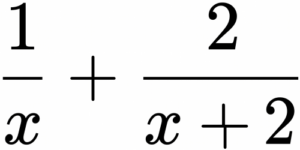
Take your time. Follow the steps:
- Factor
- Find a common denominator (if needed)
- Multiply or divide carefully
- Simplify
If these practice questions feel challenging, an online precalculus tutor can walk you through each step and explain where things might be going wrong.
Watching a video explanation or using a resource like Khan Academy can also give you another way to understand the concept.
You’ve Got This
Learning to simplify a rational expression can feel tricky at first, but it’s really about following a clear process.
The more you practice, the more patterns you’ll start to notice.
And if something doesn’t make sense right away, that’s completely normal in math. Sometimes all it takes is a different explanation or a bit more guided practice.
If you need extra support, you can always reach out to Your Private Tutors. We can help you work through practice questions, break down each step, and build your confidence with rational expressions and beyond.
Keep going. You’re making progress.